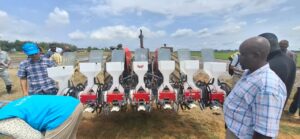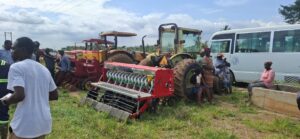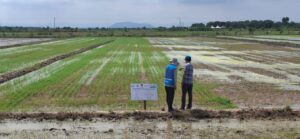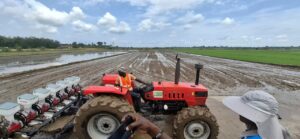













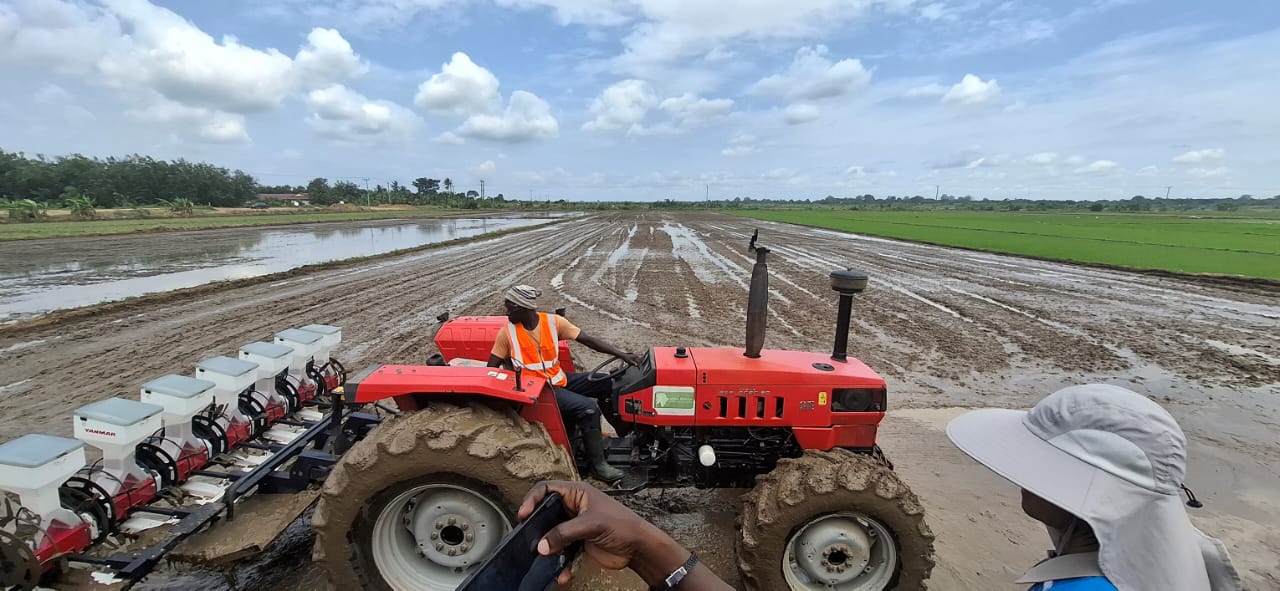
The Japan International Cooperation Agency, JICA, in collaboration with the Directorate of Crop Services DCS, and the Ghana Irrigation Development Authority, GIDA, of the Ministry of Food and Agriculture MoFA, successfully hosted a significant field demonstration showcasing innovative labour-saving technologies aimed at enhancing Ghana’s rice production under the Ghana Rice Production Improvement Project (GRIP). This strategic initiative seeks to address escalating production costs and labour shortages impacting the competitiveness of locally produced rice.

Ghana currently faces the pressing challenge of importing approximately 950,000 tons of rice annually, with Asian varieties dominating the market due to their cost efficiencies. Local rice farmers struggle with increasing machinery service fees for ploughing and harvesting, along with a declining workforce as youth migrate to other sectors. This heavy reliance on manual labour for essential tasks—ranging from ploughing and seeding to fertilization, harvesting, and drying—has inflated production costs, rendering local rice competitively priced with, or even higher than, imported varieties.
To overcome these barriers, GRIP has advocated for the integration of modern, labour-saving mechanization as a pivotal strategy to decrease production time and reduce costs. The recent field demonstration, orchestrated in partnership with the Agricultural Engineering Services Directorate (AESD) of MoFA and the GIZ-supported Market-Oriented Value Chains for Jobs and Growth in the ECOWAS Region (MOVE), offered agricultural stakeholders—including institutions, service providers, and rice producers—the opportunity to assess the practicality and economic benefits of innovative equipment firsthand.
Highlighted technologies included:
Dry-field direct seeders
No-till dry-field direct seeders
Wet-field direct seeders
Drone seeders
Drive harrows
These advanced tools aim to simplify land development, improve puddling operations and soil leveling, reduce manual labour requirements, and enhance post-harvest efficiency, ultimately improving rice quality. Additionally, GRIP introduced a flat-bed paddy dryer, developed by the International Rice Research Institute (IRRI) and fabricated locally, as a time-saving alternative to traditional outdoor drying methods.



The event emphasised more than just demonstrations; it fostered direct engagement between machinery manufacturers, dealers, agricultural service providers, and farmers. This collaborative effort is intended to enhance technical reliability, facilitate widespread adoption of these technologies, and encourage the creation of new service-provider business models accessible to rice-growing regions.
A press release from JICA Ghana, through its Public Relations Advisor, Kojo Williams, said the demonstration took place at the Kpong Irrigation Scheme (KIS) and was attended by all stakeholders committed to achieving rice self-sufficiency in Ghana.
About GRIP: The Ghana Rice Production Improvement Project (GRIP) is a five-year technical cooperation project (March 2022 to February 2027) implemented by JICA in partnership with the Directorate of Crop Services (DCS) and the Ghana Irrigation Development Authority (GIDA). The project aims to disseminate advanced rice cultivation technologies widely and is closely coordinated with the National Rice Coordinating Committee (NRCC) and other development partners.