
By Jeorge Wilson Kingson
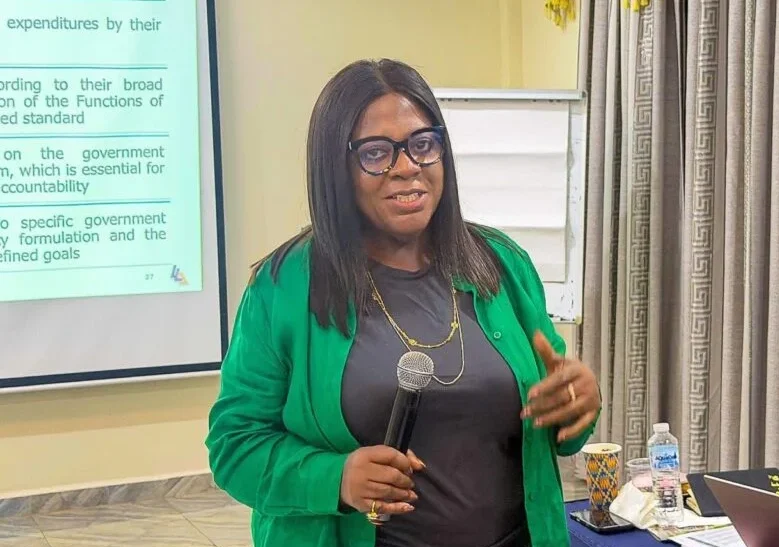
A former Director at Ghana’s Ministry of Finance, Eva Mends, has cautioned that growing political and public pressure on government to increase spending could push the country back into a dangerous cycle of higher deficits, rising inflation and economic instability.
Addressing members of the Parliamentary Press Corps at a fiscal management workshop in Koforidua, Ms. Mends warned that governments that expand spending beyond available revenue often resort to borrowing—an approach she said could quickly reverse the fragile macroeconomic gains Ghana has recently recorded.
According to her, the temptation to satisfy competing demands from Ministries, Members of Parliament and the public often places the country’s fiscal framework under severe strain.
Ms. Mends explained that requests for increased funding across sectors such as education, infrastructure and social services are legitimate, but they must be weighed carefully against the country’s fiscal capacity.

Such borrowing, she warned, has the potential to drive inflation higher, increase interest rates and weaken macroeconomic stability.
She noted that while legislators and sector ministers advocate for larger budget allocations to support development priorities, the responsibility of maintaining fiscal discipline ultimately rests with the Finance Minister.
According to her, a finance minister must be able to coordinate spending across government institutions and ensure that expenditure decisions align with the country’s broader macroeconomic strategy.
The former finance official also warned against financial commitments made outside the national budget framework, particularly by state institutions and state-owned enterprises.
She explained that such unplanned obligations often force government to redirect resources from planned programmes, creating additional pressure on already constrained public finances.
Ms. Mends further highlighted a structural challenge facing developing economies like Ghana, where increased government spending does not always generate strong domestic economic returns.
She explained that much of the additional demand created by government expenditure in Ghana often translates into imports rather than domestic production.
As a result, the country does not fully benefit from the multiplier effects that government spending generates in more industrialised economies.
She also pointed to the growing influence of social media and global connectivity, which she said have significantly raised public expectations for rapid economic transformation.
According to her, citizens frequently compare Ghana’s development pace with that of advanced economies, despite the significant differences in available resources.
The workshop was organised under the auspices of the Parliament of Ghana with support from the World Bank and the Foreign, Commonwealth & Development Office (FCDO), and aimed to strengthen journalists’ capacity to analyse fiscal data and report effectively on national budget issues.
Source: GhanaNewsOnline